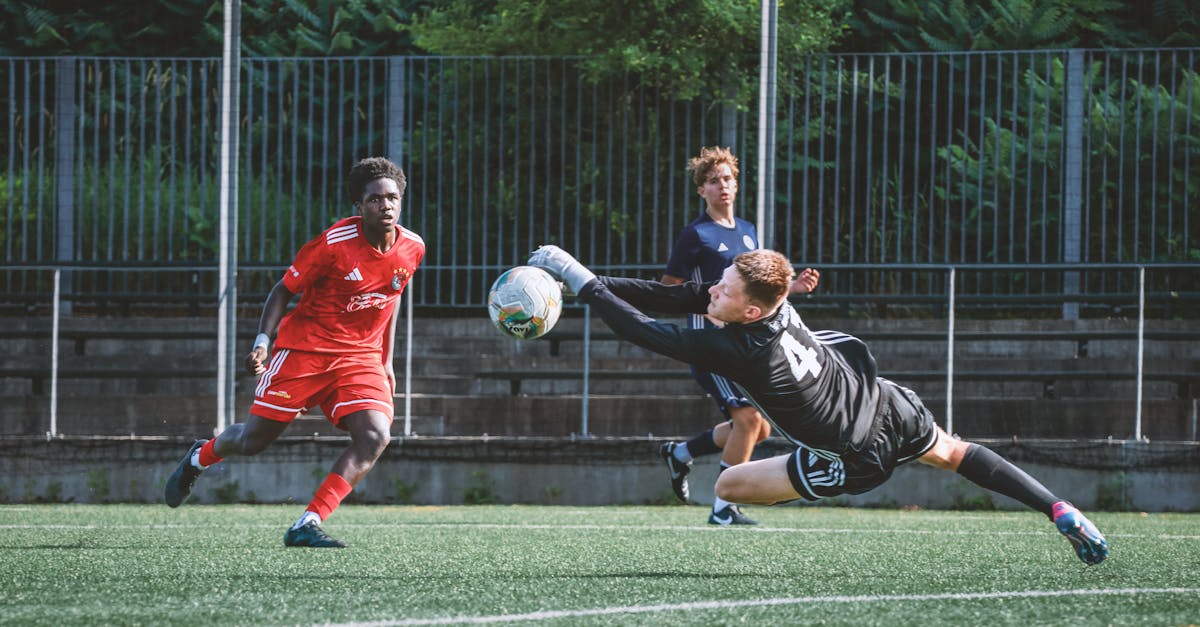

When I first started playing soccer I quickly realized that skill alone wasn’t enough to outplay my opponents. The smartest players always seemed one step ahead reading the game and making decisions before anyone else could react. That’s when I learned about soccer IQ and how it separates good players from great ones.
Soccer IQ is all about understanding the game on a deeper level. It means knowing where to move how to anticipate plays and how to make the right choices under pressure. I found that boosting my soccer IQ didn’t just make me a better player—it made the game more fun and rewarding. If you want to play smarter and stand out on the field there are clear steps you can take to sharpen your soccer mind.
Understanding Soccer IQ
Soccer IQ shapes how well I read the game and influence team play. This concept goes beyond foot skills and captures decision-making during live action.
What Is Soccer IQ?
Soccer IQ means understanding in-game situations and reacting with effective choices. I combine awareness, tactical thinking, and anticipation to increase my soccer IQ. Reading opponents’ movements, predicting passing lanes, and identifying space are practical skills that raise my soccer intelligence level. For example, controlling ball tempo in midfield and recognizing defensive gaps both depend on soccer IQ. Whether pressing high or defending in numbers, I assess evolving scenarios every minute. High soccer IQ includes recognizing patterns and organizing teammates during transitions. By focusing on mental aspects of play, I keep mistakes low and maximize my impact on the field during both offense and defense.
Why Is Soccer IQ Important?
High soccer IQ enables me to improve strategic performance and react under pressure. I rely on sharp soccer IQ to support teammates by making runs at the right moments and intercepting dangerous passes. Advanced decision-making lets me anticipate threats and connect plays quickly in fast-paced matches. In game-winning moments, my soccer IQ translates into split-second choices that alter outcomes. For instance, seeing an offside trap or controlling pace in the final minutes gives my team competitive advantages. High soccer IQ raises my awareness, minimizes errors, and keeps my tactical skills relevant throughout the match. Building soccer IQ directly boosts my consistency and leadership on the field.
Materials and Tools Needed
Developing soccer IQ demands a blend of practical training aids and targeted resources. I use specific materials and tools to reinforce tactical awareness and in-game decision-making.
Training Aids and Equipment
Improving soccer IQ requires using tangible training aids that simulate realistic match scenarios. I rely on tactical boards to break down formations and visualize strategies. Cones and agility poles help me run movement drills that test perception and spatial awareness. Practice vests support small-sided games, which force me to process information at game speed. Passing arcs and rebounders sharpen my reactions and first-touch decisions under pressure. Each equipment type strengthens a specific soccer intelligence skill, ensuring my growth goes beyond basic technique.
Recommended Reading and Videos
Targeted reading materials and video breakdowns help me understand tactical decision-making for higher soccer IQ. I study playbooks from leading coaches such as Pep Guardiola and books like “Inverting the Pyramid” by Jonathan Wilson, which explain the history and application of tactics. Watching video analysis from channels like Tifo Football or coaching DVDs provides real-game context, emphasizing positioning and movement patterns. I review Champions League match replays and tactical breakdowns to observe examples of anticipation and quick decision-making. Consistently consuming these resources accelerates my soccer IQ development and strengthens my tactical thinking during training and games.
Building Foundational Knowledge
Developing soccer IQ begins with a solid understanding of core soccer knowledge. I integrate targeted learning into my routine to ensure each aspect of soccer IQ builds on a strong foundation.
Learning the Rules and Regulations
Mastering official soccer rules strengthens foundational soccer IQ. I review FIFA’s Laws of the Game, covering offside, fouls, goal rules, substitutions, and more. Studying match situations allows me to see how referees interpret different scenarios like deliberate handball or advantage play. I reference digital rulebooks and interactive quizzes from US Soccer for regular updates. Watching analysis videos of controversial calls reveals the nuances that affect each decision. Deep familiarity with updated rules ensures my reactions align with current standards and prevent costly errors during competitive matches. Mastering these details increases my soccer IQ during live play.
Understanding Player Positions and Roles
Knowing specific soccer player positions sharpens my soccer IQ and strengthens my game awareness. I break down responsibilities for each position such as center back, winger, defensive midfielder, and forward. I map out zones of operation on a tactical board for each position. Reviewing player movement in game footage like fullbacks overlapping or strikers pressing defenders gives me clear role-based expectations. I check player interviews or tactical guides for insights into role differences between formations. Consistent role study enables me to adapt quickly when a coach shifts my position, which accelerates my soccer IQ growth.
Studying Formations and Tactics
Studying soccer formations directly builds tactical soccer IQ. I analyze common formations such as 4-4-2, 4-3-3, or 3-5-2, using visual aids to understand player spacing and movement. By watching elite-level matches, I identify changes like shifting from defense to attack or exploiting space using width in a 4-3-3. Breaking down transition play, pressing strategies, and rotation patterns uncovers the tactical intent behind each setup. I supplement match analysis with PDFs or online guides from coaching organizations. Constant exposure to formation tactics enables me to recognize patterns faster, increasing my tactical soccer IQ during real-time decisions.
Developing Game Awareness
Game awareness anchors my soccer IQ, allowing me to process information quickly and react decisively under pressure. I focus on sharpening my vision, anticipating action, and identifying field patterns, connecting each aspect to a stronger soccer IQ.
Improving Vision and Spatial Awareness
I enhance my soccer IQ by consistently scanning the field and tracking player movement. Frequent head checks and peripheral vision exercises, such as “shoulder checks” before receiving a pass, develop my spatial awareness. I use grid-based small-sided games—for example, 4v4 possession drills within marked zones—to improve recognition of open lanes and pressure points. Integrating cone-based vision drills sharpens my ability to spot teammates and threats faster. Feedback from coaches during film reviews highlights where open space exists, reinforcing my understanding. Consequently, my ability to navigate crowded situations and maintain awareness of ball position boosts my soccer IQ effectiveness on both offense and defense.
Anticipating Plays and Opponent Moves
I strengthen my soccer IQ by learning how to anticipate plays before they unfold. Analyzing common attacking and defensive patterns—such as overlapping fullbacks or high-press triggers—sharpens my awareness of potential outcomes. I study video breakdowns from top leagues to examine how elite players read body cues and predict passes. During training, I actively focus on cues like a midfielder glancing upfield or a forward shifting weight, immediately responding in real time. In live matches, I challenge myself to predict next moves, then reflect on accuracy using post-game analysis. Developing this anticipation lets me intercept passes and exploit weak points, dramatically increasing my soccer IQ performance.
Recognizing Patterns on the Field
I sustain my soccer IQ growth by recognizing recurring patterns in games and training. I regularly watch recorded matches, noting sequences that repeat, like switching play after crowding one side or using third-man runs to break defensive blocks. Mapping out these patterns on tactical boards helps reinforce memorization and quick identification. I participate in drills that mimic real-game cycles, for example, defending counter-attacks or setting pressing traps. Sharing insights with teammates builds collective awareness and sharpens my recognition speed. Consistently identifying patterns means I execute faster decisions, giving my soccer IQ a measurable advantage every match.
Practicing Decision-Making Skills
Consistently practicing decision-making skills elevates soccer IQ in real match conditions. I emphasize methods that create authentic moments to fine-tune tactical thinking and on-field judgment.
Small-Sided Games for Quick Thinking
Small-sided games maximize soccer IQ growth by increasing the frequency and intensity of decision-making. I set up 3v3 or 4v4 matches in tight spaces, which forces players to scan, decide, and act under immediate pressure. Rapid transitions in these environments demand instant recognition of open teammates or risky passes, just like high-level match situations. Examples include one-touch restrictions or adding neutral players to simulate overloads, which challenge adaptive thinking. According to the United States Soccer Federation, frequent participation in small-sided games improves game intelligence, helping me transfer split-second choices to full-sided matches with greater confidence.
Scenario-Based Drills
Scenario-based drills immerse me in match-specific soccer IQ challenges, simulating real situations for tactical improvement. For example, I rehearse 2v1 or 3v2 breakaways to sharpen decision-making on attack and defense. I include defending with a one-goal lead in the final minutes or building up play from the back under pressure. Each scenario encourages analysis of movement, spacing, and timing, anchoring fundamental soccer IQ concepts in realistic contexts. Research in the “International Journal of Sports Science & Coaching” demonstrates that scenario replication enhances anticipation and problem-solving during competitive games, cementing my ability to make strategic choices.
Video Analysis and Self-Reflection
Video analysis and self-reflection accelerate soccer IQ by visualizing actions and evaluating decision-making effectiveness. After matches or training, I review game footage to assess positioning, awareness, and response to critical moments. I identify missed opportunities, analyze reasons for certain plays, and note successful decisions for repetition. For deeper soccer IQ development, I cross-reference my decisions with expert tactical breakdowns, applying lessons in future sessions. Studies from the Journal of Sports Sciences show that structured review sessions foster advanced recognition skills and reinforce efficient in-game habits, promoting a higher soccer IQ.
Enhancing Communication Skills
Boosting soccer IQ depends on how well I communicate with teammates in fast-paced scenarios. Effective verbal and non-verbal exchanges drive collective tactical improvement and support immediate on-field adjustments.
Talking Effectively With Teammates
Direct and concise talking sharpens soccer IQ during live play. I call out names, provide time warnings—like “Man on!”—and highlight open spaces, which keeps every teammate alert and synchronized. Using simple phrases minimizes confusion and speeds up team decisions, especially when executing pressing or defensive rotations. Regular training sessions include communication drills, such as coordinated passing circuits or shadow play, to reinforce these habits. By adapting my tone to urgency or encouragement, I create a clearer team environment, which builds trust and enhances situational awareness. Consistent command usage across the squad reduces hesitation, supporting faster ball movement and better tactical execution, which maximizes soccer IQ potential in high-pressure games.
Reading Non-Verbal Cues
Reading non-verbal cues raises my soccer IQ by helping anticipate team intentions without words. I observe head tilts, arm gestures, or body position changes, especially before switches in play or overlapping runs. Quick recognition of these signals means I can react to tactical shifts, like a backline stepping up or a midfielder signaling for a through pass. Training with pattern-based exercises—such as silent possession games—improves my skill in identifying these indicators under match-speed conditions. By aligning my movements with teammates’ gestures or eye contact, I synchronize pressing traps or coordinated attacks, which strengthens collective strategy. Mastering non-verbal communication ensures uninterrupted play, accelerates decision-making, and directly enhances my soccer IQ in fluid game situations.
Using Technology to Increase Soccer IQ
Leveraging technology accelerates soccer IQ development and boosts real-time learning efficiency. I use digital tools to analyze performance data, study soccer tactics, and optimize decision-making with immediate feedback.
Apps for Tactical Analysis
Apps for tactical analysis provide actionable insights and interactive soccer IQ training. I rely on Hudl, Coach’s Eye, and TacticalPad to analyze game footage, break down tactics, and create custom drills. These platforms help me visualize formations and track movement patterns, connecting theory with on-field execution. By annotating plays and reviewing key moments, I deepen my tactical understanding and see how elite players make quick decisions. Consistent use of tactical analysis apps increases my situational awareness and refines my soccer IQ, aligning training with professional standards.
Using Wearables and Performance Tracking
Using wearables and performance tracking tools supports a data-driven boost to soccer IQ. My GPS trackers, heart rate monitors, and smart soccer balls record movements, measure work rates, and highlight strengths and weaknesses in real time. I review data from devices like Catapult and Polar to monitor distance covered, speed bursts, and recovery times after each session. Insights from wearables guide my training focus on spatial awareness, decision speed, and tactical discipline. Evaluating these metrics alongside match footage creates a comprehensive feedback loop crucial for continuous soccer IQ advancement.
Tips for Coaches and Parents
My approach centers on guiding players toward advanced soccer IQ through targeted support. Coaches and parents play key roles by shaping environments and reinforcing critical thinking for smarter play.
Creating a Soccer IQ-Focused Training Environment
I structure practices to prioritize deep understanding and game intelligence by integrating soccer IQ into every session. I design drills that demand reading the field—like shifting small-sided games based on tactical scenarios or adjusting formations mid-drill. I stop play frequently to ask players about positioning decisions and movement choices. Realistic match simulations with set triggers—such as sudden transitions or space overloads—force players to react and adapt, mirroring game conditions. I use tactical feedback consistently, reinforcing concepts like press resistance, off-ball movement, and positional awareness. Parents reinforce this focus at home by watching matches with their player, analyzing key plays and discussing tactical choices using soccer IQ principles. My consistent use of language around “decision-making” and “reading the game” helps young athletes build habits that elevate their tactical intelligence.
Encouraging Critical Thinking On and Off the Ball
I promote soccer IQ development by fostering thoughtful engagement both during and outside matches. On the field, I challenge players with “what-if” scenarios—like asking “What would you do if possession is lost here?”—to spark instant evaluation and proactive thinking. I require frequent switching of roles, so players experience defensive and attacking perspectives, enhancing spatial and tactical flexibility. Off the field, I ask players to review video clips, highlight decision points, and articulate alternatives, embedding reflection into their routine. For parents, shared viewing sessions help reinforce situational awareness and analytical skills, with deliberate pauses to dissect choices or anticipate next moves. Through ongoing dialogue about patterns, threats, and opportunities, I foster an environment where soccer IQ becomes a natural part of every interaction—translating technical drills into lasting tactical mastery.
Common Issues and Troubleshooting
Soccer IQ development often brings challenges that disrupt progress. I address common issues and use targeted troubleshooting to maintain consistent soccer IQ growth.
Overcoming Information Overload
Soccer IQ growth sometimes stalls when I absorb too many tactical concepts, video reviews or formation breakdowns in one session. I prioritize information in small clusters, focusing on 1 or 2 tactical principles such as pressing and build-up play per week. Visualizing core scenarios with a tactical board helps map the details without confusion. After each learning session, I recap my key takeaways in a notebook, filtering out non-essential soccer strategy elements. When analyzing match footage, I select only relevant phases, like transitions or defensive organization, rather than watching entire games. This method keeps my soccer IQ expansion directed and prevents cognitive fatigue. If new drills or strategies conflict, I pause and review fundamental concepts, using FIFA Laws or expert analysis as my benchmarks for clarity and continuity.
Handling Decision-Making Under Pressure
Decision-making speed directly reflects soccer IQ in live matches, but under pressure, rushed or repetitive decisions occur if my mental preparation lapses. I simulate pressure environments during training, such as short-timed small-sided games or unpredictable scenario drills, to force quick, context-driven choices. Practicing breathing routines and fixed scanning intervals during these drills sharpens focus. Reviewing split-second in-game situations from elite matches, I break down how top players anticipate, then react under stress. I rehearse these moments mentally, visualizing my responses based on prior soccer IQ lessons, then test my anticipation during live scrimmages. If I notice recurring mistakes, I analyze where my perception or communication faltered, adapting my decision-making process in the next session. This targeted approach strengthens my soccer IQ and improves real-time judgment under match pressure.
Conclusion
Building soccer IQ has completely changed how I approach the game. It’s not just about technical skills—it’s about thinking faster and seeing the field in new ways. The journey takes patience and a willingness to learn from every match and training session.
As I’ve focused on improving my soccer intelligence I’ve found that each step brings more confidence and enjoyment. If you’re committed to growth you’ll see your decision-making sharpen and your impact on the field multiply. Soccer IQ is a lifelong pursuit and the rewards are worth every effort.
Frequently Asked Questions
What is soccer IQ, and why is it important?
Soccer IQ is a player’s ability to understand and read the game, make quick decisions, and anticipate plays. It goes beyond technical skills, helping players react effectively to game situations, support teammates, and maximize their impact on both offense and defense.
How can I improve my soccer IQ?
You can improve your soccer IQ by combining practical training with tactical study. Use drills, analyze match videos, study tactics, and learn the rules. Consistent practice, reflection, and working with coaches or teammates will enhance decision-making and game awareness.
What training tools and resources help develop soccer IQ?
Useful tools include tactical boards, cones, agility poles, practice vests, and soccer balls for drills. Resources like playbooks, tactical breakdowns, and analysis videos from expert coaches also help deepen understanding of strategies and game scenarios.
Why is understanding the rules and positions crucial for soccer IQ?
Mastery of the official rules and knowledge of player roles help you make better decisions and adapt quickly during matches. Understanding formations and tactics boosts your ability to predict plays and support your team effectively.
How do small-sided games boost soccer IQ?
Small-sided games, like 3v3 or 4v4, create more decision-making opportunities under pressure. These games increase touches on the ball, force quick thinking, and help players practice tactics in realistic, high-intensity scenarios.
What role does communication play in soccer IQ?
Effective communication—both verbal and non-verbal—ensures better teamwork, quicker tactical adjustments, and clearer understanding on the field. Good communication skills help anticipate teammates’ intentions, improve coordination, and reduce errors during matches.
How can technology help enhance soccer IQ?
Technology such as video analysis apps, GPS trackers, and performance software enables players to analyze their own play, study tactics, and get real-time feedback. This helps identify strengths and areas to improve, accelerating soccer IQ development.
What challenges might I face in developing soccer IQ?
Common challenges include information overload and making quick decisions under pressure. Overcome these by breaking tactical concepts into manageable parts, simulating match pressure in training, and practicing mental preparation techniques.
How can coaches and parents help young players build soccer IQ?
Coaches and parents can create a learning environment focused on game intelligence. Use tactical drills, encourage critical thinking, review game footage together, and engage in open discussions about decision-making to help players understand the game better.
Does having a high soccer IQ improve leadership on the field?
Yes, players with high soccer IQ can read the game, support teammates, and adapt strategies quickly. This improves consistency, reduces mistakes, and allows them to lead by example during high-pressure situations.


